Johns Hopkins UniversityEst. 1876
America’s First Research University
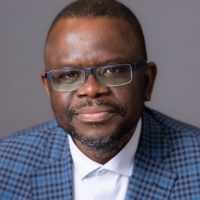
Obiora Okafor
Edward B. Burling Chair in International Law
Faculty Co-Lead, Governance, Politics, and Society Focus Area
About
Professor Obiora Chinedu Okafor is the Edward B. Burling Chair in International Law at the Johns Hopkins University School of Advanced International Studies (SAIS). He has taught international law at the Osgoode Hall Law School, York University, Toronto; Carleton University, Ottawa; and the University of Nigeria, Enugu Campus, Nigeria. He has also served as an SSRC-MacArthur Foundation Visiting Scholar at Harvard Law School’s Human Rights Program; a Canada-US Fulbright Scholar at MIT; a Visiting Professor at the International Institute of Human Rights in Strasbourg, France; and the Gani Fawehinmi Distinguished Chair of Human Rights Law at the Nigerian Institute of Advanced Legal Studies, Abuja, Nigeria.
Professor Okafor served, between 2017 and 2023, as the UN Independent Expert on Human Rights and International Solidarity (one of the principal group of human rights experts who advice and report annually to the UN Human Rights Council and General Assembly) and is a former Chairperson of the United Nations Human Rights Council Advisory Committee (a Geneva-based committee of experts elected by the Human Rights Council to serve as its think tank and principal subsidiary organ). In these two capacities, he has authored over eighteen UN Reports. He has also served as an expert panelist for the United Nations Security Council’s Counter-Terrorism Committee and United Nations Working Group on People of African Descent. And he has worked as a consultant or adviser for several international organizations, government agencies, national parliaments, and law firms.
Professor Okafor received the 2010 Award of Excellence from the Canadian Association of Law Teachers, and has been awarded the Gold Medal for Exceptional Research and Major Contributions to Jurisprudence of the Nigerian Institute of Advanced Legal Studies (2013). He has also won Osgoode’s Teaching Excellence Award twice, in 2002 and 2007. His doctoral dissertation at the University of British Columbia received the Governor General’s Gold Medal (the university prize for overall best dissertation).
Professor Okafor has published extensively in the fields of international law, including on international human rights law and immigration/refugee law, and third world approaches to international law. He is the author of Refugee Law after 9/11: Sanctuary and Security in Canada and the United States (Vancouver: The University of British Columbia Press, 2020); The African Human Rights System, Activist Forces, and International Institutions (Cambridge: Cambridge University Press, 2007); Legitimizing Human Rights NGOs: Lessons from Nigeria (Trenton, New Jersey: Africa World Press, 2006); and Re-Defining Legitimate Statehood (The Hague: Martinus Nijhoff, 2000). He has co-edited three other books: Legitimate Governance in Africa: International and Domestic Legal Perspectives (The Hague: Kluwer, 1999); Humanizing Our Global Order: Essays in Honour of Ivan Head (University of Toronto Press, 2003); and The Third World and International Order: Law, Politics and Globalization (Leiden: Martinus Nijhoff, 2003). Professor Okafor has edited four special journal issues and published over one hundred (100) journal articles, book chapters and other scholarly writings.
Professor Okafor was the founding General Editor, of the Transnational Human Rights Review and later served as its Co-Editor-in-Chief. He also sits on the editorial boards of a number of scholarly periodicals, including the American Journal of International Law, the International Journal of Law in Context, the Journal of African Law, the African Human Rights Law Journal, the Nigerian Yearbook of International Law, and the TWAIL Review.
Professor Okafor has won many research grants and led many major, grant-funded, field research and dissemination projects covering multiple countries relating to human rights in Africa, Canadian/African human rights engagements, and the African Human Rights Action Plan.
Professor Okafor served, between 2017 and 2023, as the UN Independent Expert on Human Rights and International Solidarity (one of the principal group of human rights experts who advice and report annually to the UN Human Rights Council and General Assembly) and is a former Chairperson of the United Nations Human Rights Council Advisory Committee (a Geneva-based committee of experts elected by the Human Rights Council to serve as its think tank and principal subsidiary organ). In these two capacities, he has authored over eighteen UN Reports. He has also served as an expert panelist for the United Nations Security Council’s Counter-Terrorism Committee and United Nations Working Group on People of African Descent. And he has worked as a consultant or adviser for several international organizations, government agencies, national parliaments, and law firms.
Professor Okafor received the 2010 Award of Excellence from the Canadian Association of Law Teachers, and has been awarded the Gold Medal for Exceptional Research and Major Contributions to Jurisprudence of the Nigerian Institute of Advanced Legal Studies (2013). He has also won Osgoode’s Teaching Excellence Award twice, in 2002 and 2007. His doctoral dissertation at the University of British Columbia received the Governor General’s Gold Medal (the university prize for overall best dissertation).
Professor Okafor has published extensively in the fields of international law, including on international human rights law and immigration/refugee law, and third world approaches to international law. He is the author of Refugee Law after 9/11: Sanctuary and Security in Canada and the United States (Vancouver: The University of British Columbia Press, 2020); The African Human Rights System, Activist Forces, and International Institutions (Cambridge: Cambridge University Press, 2007); Legitimizing Human Rights NGOs: Lessons from Nigeria (Trenton, New Jersey: Africa World Press, 2006); and Re-Defining Legitimate Statehood (The Hague: Martinus Nijhoff, 2000). He has co-edited three other books: Legitimate Governance in Africa: International and Domestic Legal Perspectives (The Hague: Kluwer, 1999); Humanizing Our Global Order: Essays in Honour of Ivan Head (University of Toronto Press, 2003); and The Third World and International Order: Law, Politics and Globalization (Leiden: Martinus Nijhoff, 2003). Professor Okafor has edited four special journal issues and published over one hundred (100) journal articles, book chapters and other scholarly writings.
Professor Okafor was the founding General Editor, of the Transnational Human Rights Review and later served as its Co-Editor-in-Chief. He also sits on the editorial boards of a number of scholarly periodicals, including the American Journal of International Law, the International Journal of Law in Context, the Journal of African Law, the African Human Rights Law Journal, the Nigerian Yearbook of International Law, and the TWAIL Review.
Professor Okafor has won many research grants and led many major, grant-funded, field research and dissemination projects covering multiple countries relating to human rights in Africa, Canadian/African human rights engagements, and the African Human Rights Action Plan.
In the News
UN Expert Calls for Declaration on the Right to International Solidarity
UN Human Rights Office of the High Commissioner, June 28, 2023
US Sanctions Violate Iranian People’s Rights to Clean Environment, Health and Life: UN Experts
UN Human Rights Office of the High Commissioner, December 20, 2022